


Project Description
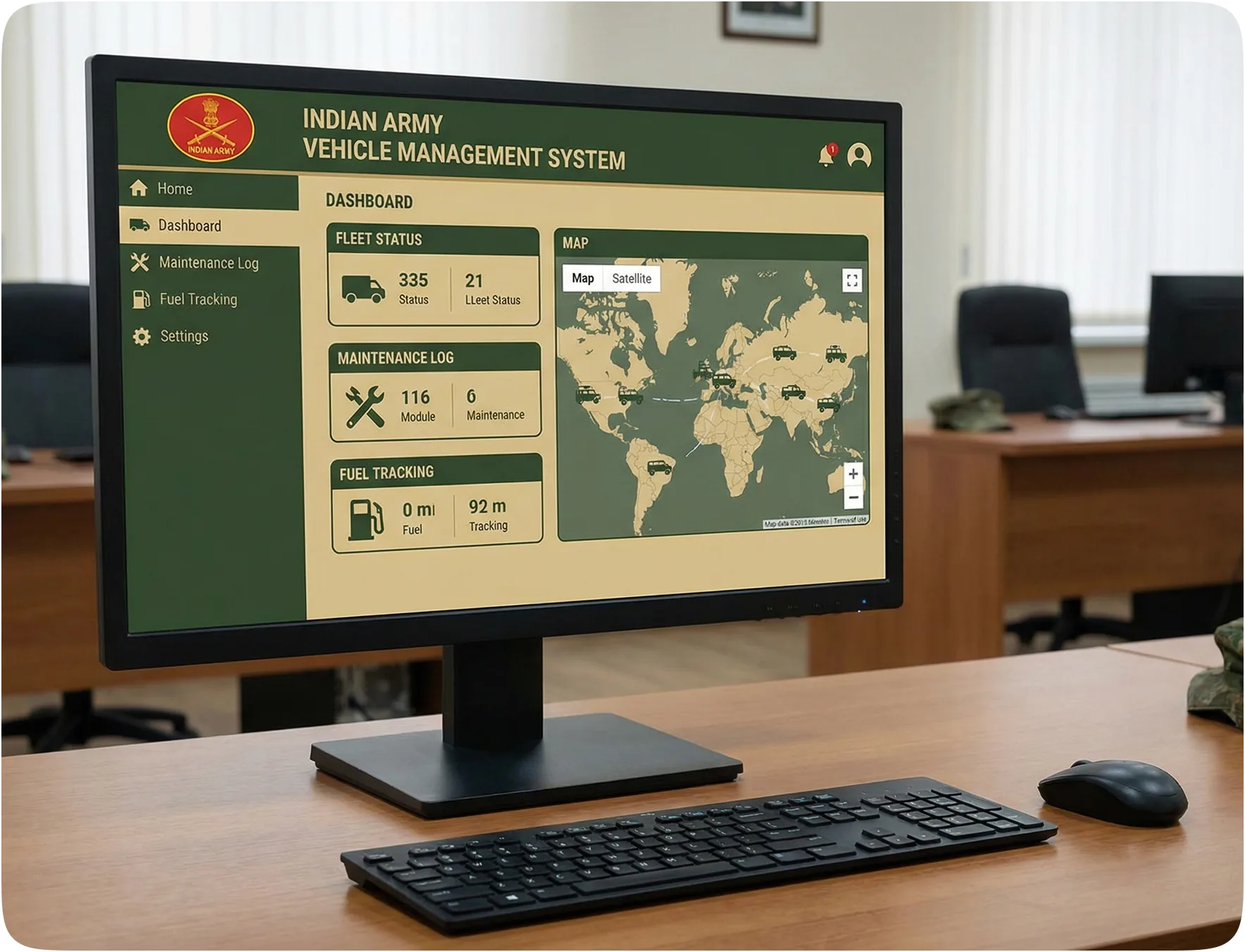
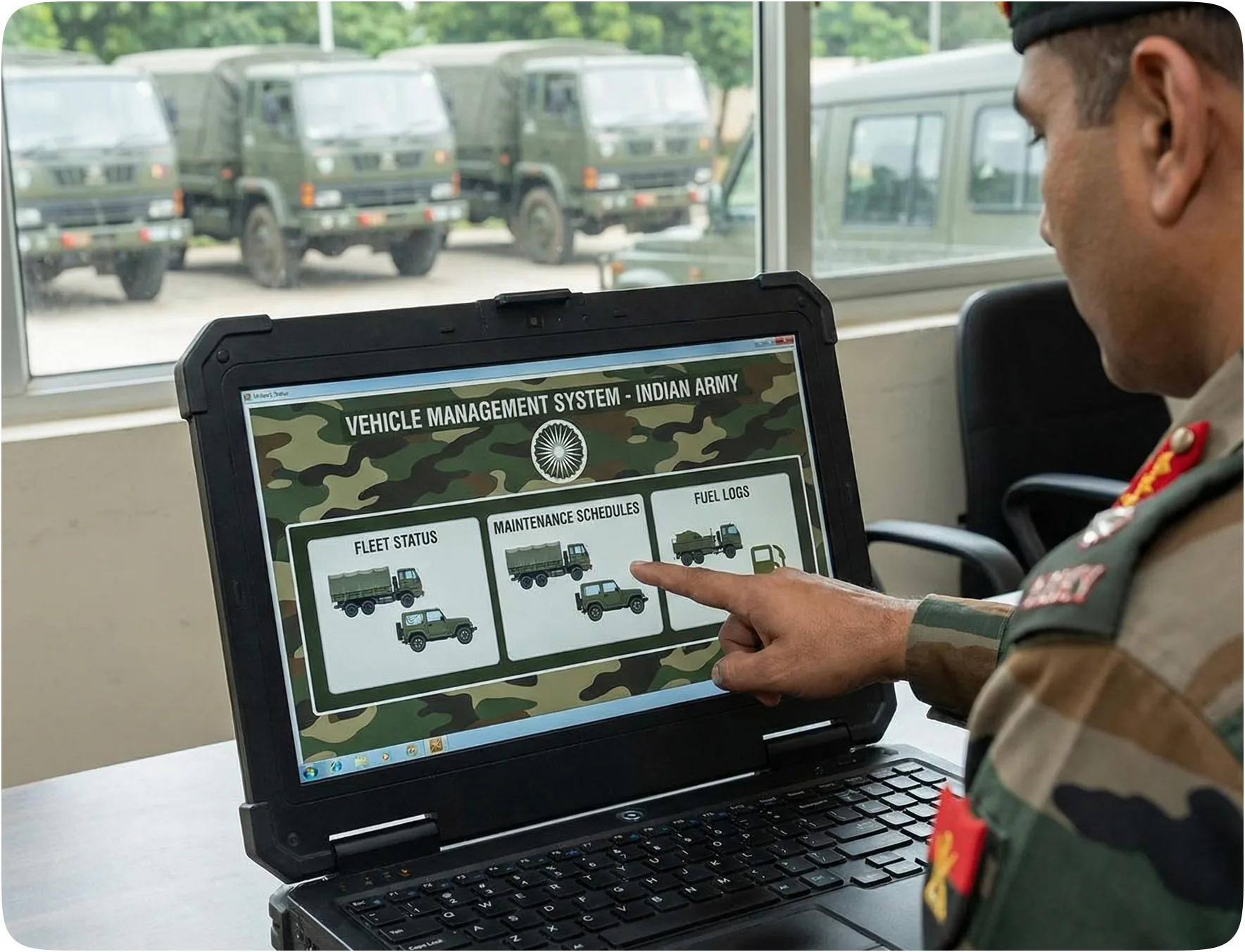
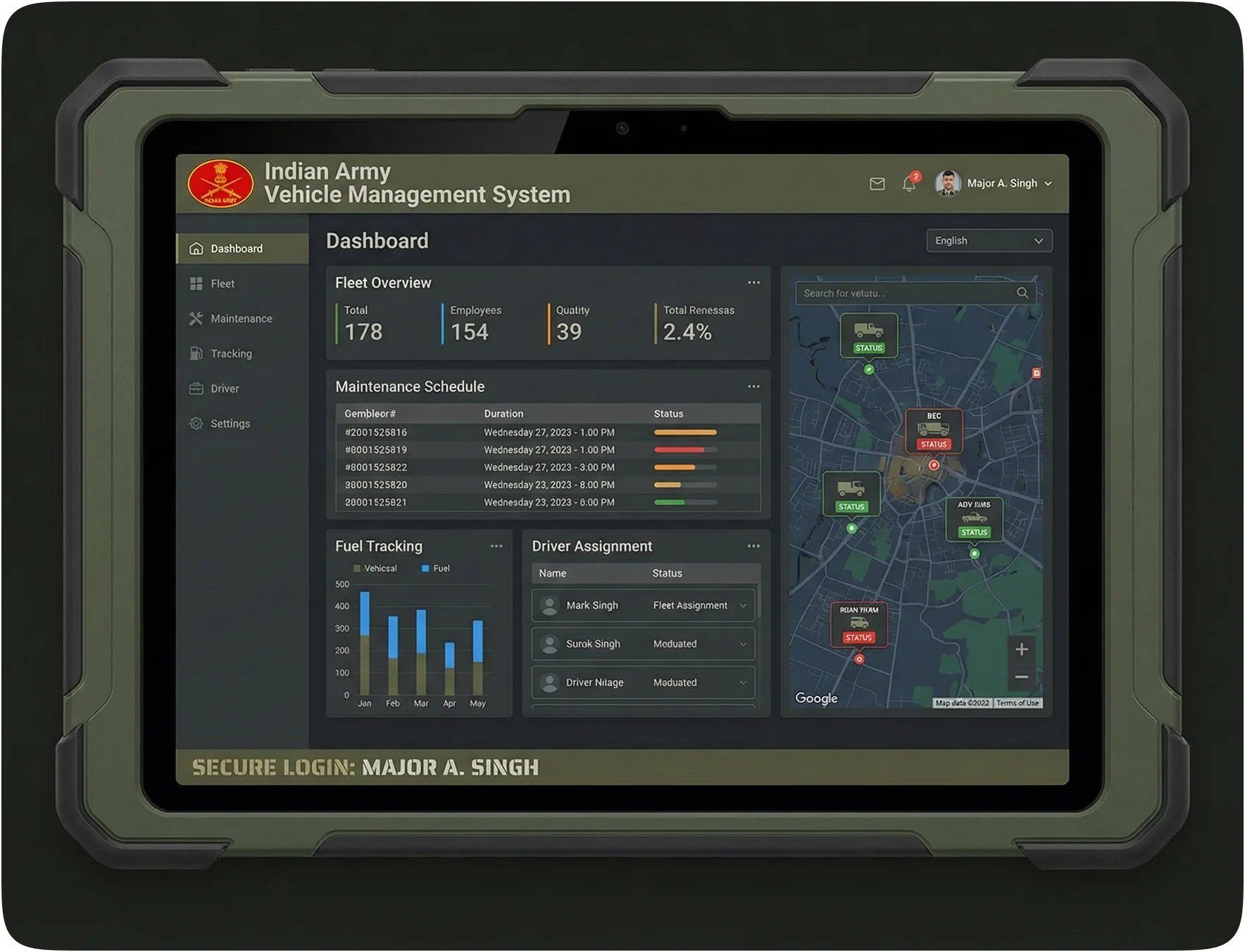
We developed a specialized Vehicle Management System (VMS) for the Indian Army, designed to operate in a completely high-security, air-gapped environment. The solution is a web-based desktop application that tracks the service history and maintenance logs of defense vehicles. Crucially, the entire architecture runs on Local Area Networks (LAN) and local servers, ensuring zero data exposure to the public internet while maintaining connectivity between different service workshops via a secure internal intranet.
Problem
Managing the maintenance history of a massive defense fleet using manual paper logs or disjointed systems created operational blind spots. Technicians lacked visibility into a vehicle's past repairs if it was serviced at a different location, and standard cloud-based fleet software was non-compliant due to strict data sovereignty and privacy requirements.
- Problem 1
Data Security Risks: Utilizing cloud-based solutions was impossible due to the top-secret nature of defense asset movement and status.
- Problem 2
Fragmented Service History: Vehicle data was siloed at individual workshops; a unit moving from one station to another lost its maintenance context.
- Problem 3
Inefficient Data Collection: Reliance on paper logs made it impossible to analyze fleet health or predict maintenance needs at scale.
Solution
We engineered a 100% Offline-First Web Architecture. The system mimics the user experience of a modern web app but is deployed entirely on local servers within the Army's secure network. It aggregates data from various service nodes without ever touching the internet.
- Solution 1
Air-Gapped Deployment: Built the entire stack to run on local servers with no external dependencies, ensuring absolute data privacy.
- Solution 2
Centralized Internal Sync: Created a synchronization protocol that updates vehicle history across different service locations using the internal LAN/Intranet.
- solution 3
Digital Service Logging: Developed a comprehensive desktop interface for logging repairs, parts replaced, and mechanic notes, creating a permanent digital lifecycle for every vehicle.

Design Process
We follow a structured UI/UX design process focused on research, strategy, and seamless execution to create digital products that engage users and drive business results.


Workflow Scenario
A military vehicle arrives at Workshop A for repairs. The technician logs into the VMS via the secure desktop terminal. They enter the vehicle's unique ID. The system queries the local server and instantly displays the vehicle's full history, including a major engine overhaul done six months ago at Workshop B. The technician performs the new service, updates the digital log, and the data is securely saved to the local server, instantly available to authorized personnel across the secure network.


The Result
The VMS modernized the fleet maintenance operations without compromising security. The Army achieved 100% data sovereignty, with zero risk of external leaks. The system provided unprecedented operational clarity, allowing logistics commanders to view the exact health status of vehicles across different locations, resulting in reduced downtime and extended vehicle lifecycles through better data collection.
Client feedback

We’re excited about the Äike T redesign. The team delivered a clear & intuitive experience across web and mobile, which makes it easier for users to buy or rent scooters. Their thoughtful approach to navigation, plan comparisons, and overall consistency has improved engagement and strengthened our brand’s presence in urban mobility.
.svg)